Learning Portfolio Menu
Module One Overview
Lessons Learned in Module One
Module One covered HTML, CSS, and Bootstrap. These three languages work in tandem to create stylish and fast-loading web pages. HTML handles the functional code, CSS allows for uniform and easy-to-modify styling across an entire website, and Bootstrap provides powerful and flexible framework for sleek webpages that can be optimized easily for mobile. In order to learn more about these languages, I completed a number of assignments in Codecademy and took quizzes through W3Schools. Codecademy proved to be the most useful learning experience for me when it came to HTML and CSS, as its interactive tutorials really gave a good idea of how these languages work in an actual website environment. I will go further into the most useful assignment, covering HTML structure, in the learning artifact section below.
In addition to learning about these languages, I also learned more about the concept of decentralized and centralized organization, and the effects these ways of thinking have on our technologies. The book The Starfish and the Spider gave the example of the Spaniards, a powerful centralized society, fighting and being defeated by the Apaches, a less technologically advanced but decentralized society. This was an important lesson to apply to modern-day technology organizations, where decentralized structuring is becoming more and more popular. Another important thinking exercise in this module was from Vint Cerf's lecture, Reimagining the Internet, where he described the challenges of developing the technology that created the Internet and how the Internet is evolving in ways Cerf and his team could never have predicted.
Learning Artifact
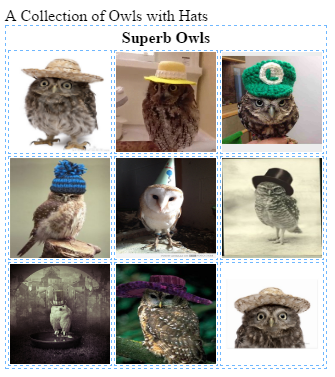
Codecademy was the most useful learning tool in Module One for me, as its numerous lessons in HTML and CSS gave a hands-on experience to actual website development. One of the most important lessons was HTML Structure: Tables, Divs, and Spans, in which it combined lessons about all of these elements in order to create an interactive, clickable photo page. It introduced new lessons about divs, demonstrating how they can function as containers for all types of elements, and also showed how spans can make it easy to edit small, individual sections of code. This final project for this lesson, the clickable photo page using these elements, can be seen below. Please click the preview to see the full photo page - each image can be selected to go to a different link.